
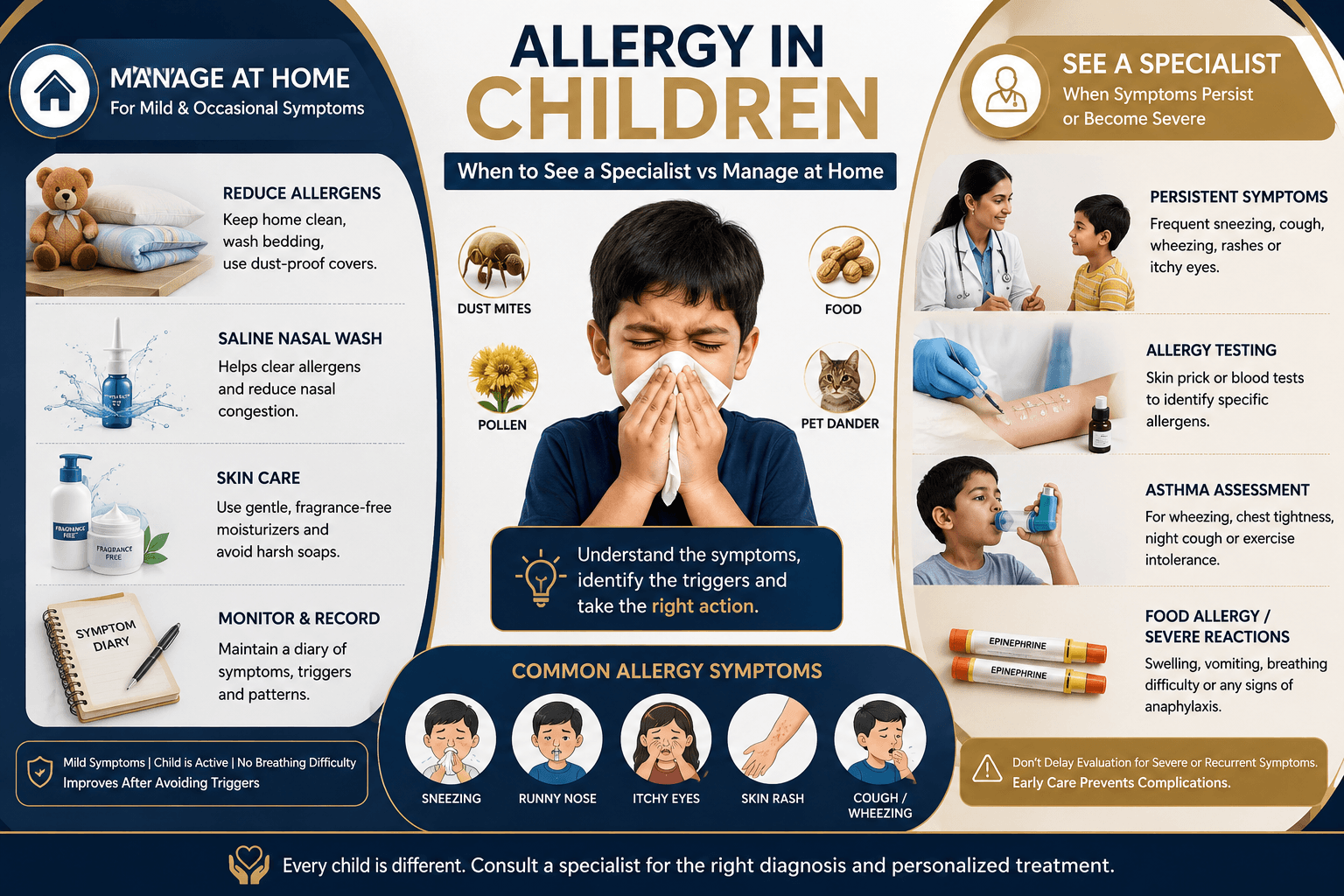
Allergy in children is becoming increasingly common. From frequent sneezing and itchy skin to food reactions and wheezing, allergies can affect a child’s comfort, sleep, school performance, and overall quality of life.
Fortunately, many mild allergies can be managed safely at home. However, some symptoms require specialist evaluation to prevent complications and ensure proper treatment.
As a physician, one common concern parents express is, “How do I know if this is just a simple allergy or something more serious?” Understanding the difference can help parents make timely and informed decisions.
What Is an Allergy?
An allergy occurs when the immune system overreacts to a substance that is usually harmless. These substances are known as allergens.
Common childhood allergens include:
- Dust mites
- Pollen
- Pet dander
- Mold
- Certain foods
- Insect stings
- Some medications
Although allergies are not usually life-threatening, severe reactions can occur in certain children.
Common Symptoms of Allergy in Children
The symptoms depend on the trigger and the body system involved.
Respiratory Allergy Symptoms
- Frequent sneezing
- Runny nose
- Nasal congestion
- Itchy nose
- Chronic cough
- Wheezing
Skin Allergy Symptoms
- Itchy rash
- Eczema flare-ups
- Redness
- Hives (urticaria)
Food Allergy Symptoms
- Lip swelling
- Facial swelling
- Vomiting
- Stomach pain
- Diarrhoea
- Skin rash
Eye Allergy Symptoms
- Itchy eyes
- Watery eyes
- Red eyes
Causes of Allergy in Children
Several factors contribute to childhood allergies.
These include:
- Family history of allergies
- Exposure to environmental allergens
- Air pollution
- Tobacco smoke exposure
- Early-life immune system factors
- Existing eczema or asthma
In many cases, children with one allergic condition are more likely to develop another.
When Allergy in Children Can Usually Be Managed at Home
Many mild allergies improve with simple measures.
Parents can often manage symptoms at home when:
- Symptoms are mild and occasional
- The child remains active and playful
- There is no breathing difficulty
- No significant swelling occurs
- Symptoms improve after avoiding the trigger
Home Management Tips
Reduce Allergen Exposure
- Wash bedding weekly in hot water
- Use dust-proof mattress covers
- Vacuum regularly
- Keep pets out of bedrooms
- Reduce indoor humidity
Saline Nasal Washes
Saline nasal sprays can help remove allergens and reduce nasal congestion.
Skin Care for Mild Allergies
- Use fragrance-free moisturizers
- Avoid harsh soaps
- Keep fingernails trimmed
Monitor Symptoms
Keep a diary noting:
- Trigger exposure
- Foods consumed
- Symptoms
- Seasonal patterns
This information can be extremely useful if medical evaluation becomes necessary later.
When to See a Specialist for Allergy in Children
Certain situations warrant consultation with an allergy specialist or pediatrician.
Frequent or Persistent Symptoms
If symptoms occur:
- Several times a week
- Throughout the year
- Despite home management
A specialist assessment may help identify specific triggers.
Recurrent Wheezing or Asthma Symptoms
Children experiencing:
- Wheezing
- Chest tightness
- Night-time cough
- Exercise-related breathing difficulty
should be evaluated promptly.
Respiratory allergies and asthma often occur together.
Severe Eczema
Persistent eczema that:
- Disrupts sleep
- Becomes infected
- Does not improve with routine treatment
may require specialist care.
Suspected Food Allergy
Parents should seek expert advice if symptoms occur after specific foods, particularly:
- Milk
- Eggs
- Peanuts
- Tree nuts
- Shellfish
Food allergy testing should only be performed when clinically appropriate.
Repeated Allergy Episodes Affecting Daily Life
If allergies are interfering with:
- School attendance
- Sports activities
- Sleep quality
- Concentration
a specialist can help develop a long-term management plan.
Risk Factors for Severe Allergic Reactions
Certain children have a higher risk of serious allergic complications.
Risk factors include:
- Existing asthma
- Previous severe allergic reaction
- Multiple food allergies
- Strong family history of allergy
- Poorly controlled allergic disease
How Allergy in Children Is Diagnosed
Diagnosis starts with a detailed medical history.
Depending on symptoms, a doctor may recommend:
- Physical examination
- Allergy skin prick testing
- Specific IgE blood tests
- Food allergy evaluation
- Lung function testing in older children
In clinical practice, many parents request allergy testing immediately. However, testing works best when guided by symptoms and medical history rather than being performed indiscriminately.
Treatment Options for Allergy in Children
Treatment depends on the type and severity of allergy.
Common approaches include:
Allergen Avoidance
Avoiding triggers remains the most effective strategy whenever possible.
Medications
Doctors may recommend:
- Antihistamines
- Nasal steroid sprays
- Asthma inhalers
- Skin creams and moisturizers
Immunotherapy
Selected children with persistent allergies may benefit from allergy immunotherapy under specialist supervision.
Prevention Tips
Although allergies cannot always be prevented, parents can reduce exposure to common triggers.
Helpful measures include:
- Maintaining a clean indoor environment
- Avoiding tobacco smoke exposure
- Managing indoor dust
- Treating mold promptly
- Following medical advice for eczema and asthma
Lifestyle Advice for Parents
- Encourage regular outdoor play when appropriate.
- Maintain healthy sleep habits.
- Ensure balanced nutrition.
- Keep prescribed medications available.
- Educate caregivers and school staff about known allergies.
Most importantly, avoid self-diagnosing severe allergies without professional guidance.
When Should You See a Doctor?
Schedule a medical consultation if your child has:
- Symptoms lasting more than a few weeks
- Repeated wheezing
- Frequent skin rashes
- Suspected food allergy
- Poor sleep due to allergy symptoms
- Reduced school performance because of allergies
Early evaluation often prevents long-term complications.
Emergency Warning Signs
Seek immediate medical attention if your child develops:
- Difficulty breathing
- Rapid facial swelling
- Tongue swelling
- Persistent wheezing
- Severe dizziness
- Loss of consciousness
- Suspected anaphylaxis
These symptoms require urgent treatment and should never be managed at home.
Frequently Asked Questions (FAQs)
1. Can children outgrow allergies?
Yes. Some food allergies, particularly milk and egg allergies, may improve with age. However, environmental allergies often persist longer.
2. Is allergy testing necessary for every child?
No. Testing should be guided by symptoms and clinical evaluation.
3. Can allergies cause frequent cough?
Yes. Allergic rhinitis and asthma commonly cause chronic cough in children.
4. Are antihistamines safe for children?
When prescribed appropriately by a healthcare professional, many antihistamines are considered safe and effective.
5. Can dust allergies trigger asthma?
Yes. Dust mites are a common trigger for asthma symptoms in susceptible children.
6. Should schools be informed about a child’s allergy?
Absolutely. Teachers and caregivers should be aware of significant allergies, especially food allergies and asthma.
Final Takeaway
Most cases of allergy in children can be managed successfully with trigger avoidance, observation, and simple home measures. However, persistent symptoms, breathing difficulties, severe eczema, food reactions, or any signs of anaphylaxis deserve prompt medical attention. Early specialist evaluation not only improves symptom control but can also help children enjoy a healthier and more active childhood.
Medical References
- World Health Organization – Allergic diseases and respiratory health resources.
- Centers for Disease Control and Prevention – Childhood allergy and asthma information.
- National Health Service – Allergy diagnosis and management guidance.
- American Academy of Allergy, Asthma & Immunology – Pediatric allergy recommendations.
- National Institute of Allergy and Infectious Diseases – Food allergy guidelines.
- PubMed – Research articles on childhood allergy and asthma.