What is a Skin Prick Test?
Allergies are becoming increasingly common in India. Many people suffer from repeated sneezing, itching, rashes, wheezing, sinus problems, or food-related reactions without knowing the exact cause. A skin prick test is one of the most commonly used allergy tests that helps identify substances triggering allergic reactions in the body.
This test is simple, quick, and usually performed in an allergy clinic or hospital under medical supervision.
As a general physician, one common thing I notice in OPD practice is that many patients keep changing soaps, foods, or medicines randomly without actually knowing the real allergy trigger. Proper allergy testing often helps avoid unnecessary restrictions and confusion.
What is a Skin Prick Test?
A skin prick test, also called an allergy skin test, is a diagnostic procedure used to check whether a person is allergic to specific substances.
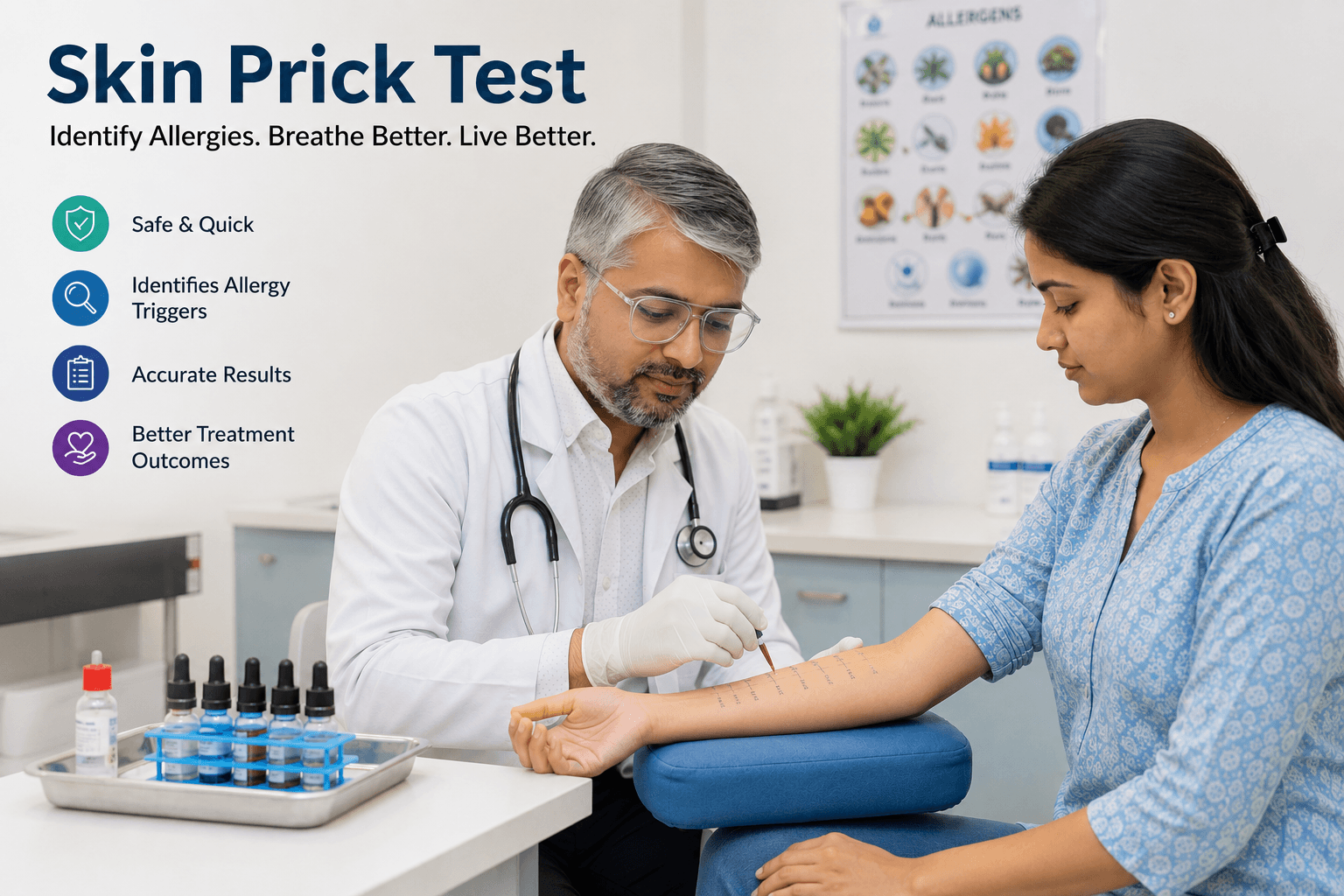
During the test, tiny amounts of possible allergens are placed on the skin, usually on the forearm or back. The skin is then gently pricked so the allergen enters the surface layer of the skin.
If the person is allergic, a small raised bump or redness appears at that site within a short time.
The test helps identify allergies related to:
- Dust mites
- Pollen
- Pet dander
- Certain foods
- Mold
- Insect allergies
- Some environmental allergens
Why is a Skin Prick Test Done?
Doctors may advise a skin prick test if someone has symptoms suggestive of allergies, such as:
Common Symptoms
- Frequent sneezing
- Blocked or runny nose
- Itchy eyes
- Repeated skin rashes
- Hives (urticaria)
- Wheezing or asthma symptoms
- Food-related itching or swelling
- Seasonal allergy symptoms
In some patients, identifying the exact trigger significantly improves symptom control and lifestyle planning.
How Does a Skin Prick Test Work?
The test works by checking the body’s immune response.
When an allergen enters the skin of a sensitive person, the immune system releases histamine and other chemicals. This causes:
- Redness
- Itching
- Swelling
- Small raised bumps called wheals
The reaction is usually visible within 15–20 minutes.
What Happens During the Test?
Step-by-Step Procedure
1. Cleaning the Skin
The healthcare professional cleans the skin area, usually the forearm or upper back.
2. Marking Different Allergens
Small marks are made on the skin to identify different allergens being tested.
3. Applying Allergen Drops
Tiny drops containing allergen extracts are placed on the skin.
4. Gentle Skin Prick
A small sterile lancet lightly pricks the surface of the skin.
The prick is very superficial and usually not painful. Most people describe it as mildly uncomfortable rather than painful.
5. Waiting Period
The patient waits for around 15–20 minutes while reactions are observed.
6. Reading the Results
The doctor measures any swelling or redness and interprets the results.
Is a Skin Prick Test Painful?
Most patients tolerate the procedure very well.
Children and adults may feel:
- Mild discomfort
- Temporary itching
- Slight irritation
The itching usually settles within a short time.
In clinical practice, many patients are initially anxious because they expect injections or blood tests. However, after the procedure, most are surprised by how quick and simple it actually is.
How Should You Prepare for a Skin Prick Test?
Proper preparation is important because some medicines can affect the results.
Before the Test
Avoid Antihistamines
Certain allergy medicines should usually be stopped before the test because they can suppress skin reactions.
This may include:
- Cetirizine
- Levocetirizine
- Fexofenadine
- Loratadine
Do not stop any medicine without discussing it with your doctor.
Inform Your Doctor About:
- Asthma history
- Previous severe allergic reactions
- Pregnancy
- Current medications
- Skin conditions like eczema
Avoid Heavy Creams or Lotions
Do not apply creams or moisturisers on the testing area before the appointment.
How Accurate is a Skin Prick Test?
Skin prick testing is considered a reliable method for diagnosing many allergies when interpreted along with symptoms and medical history.
However, the test is not perfect.
Sometimes:
- A positive test may not mean clinically significant allergy
- A person may react mildly despite symptoms
- Additional tests may be required
Doctors interpret the results together with the patient’s history rather than relying only on the report.
What Do the Results Mean?
Positive Result
A raised itchy bump suggests sensitivity to that allergen.
Negative Result
No reaction usually means allergy to that specific substance is less likely.
Your doctor will explain:
- Which allergies are significant
- Which triggers to avoid
- Whether medications or immunotherapy may help
Are There Any Risks?
Skin prick tests are generally very safe when done under medical supervision.
Mild Side Effects
- Temporary itching
- Redness
- Mild swelling
Rare Complications
Very rarely, a severe allergic reaction can occur.
That is why testing should always be performed in a proper medical setting with trained professionals and emergency support available.
Who Should Avoid a Skin Prick Test?
Doctors may avoid or postpone testing in:
- Severe uncontrolled asthma
- Extensive skin disease
- Severe active eczema
- Recent severe allergic reactions
- Certain medication use
Alternative allergy testing methods may sometimes be recommended.
Skin Prick Test vs Blood Allergy Test
Many patients ask whether blood tests are better than skin testing.
Skin Prick Test
- Faster results
- Usually more cost-effective
- Immediate observation
Blood Allergy Test
- Useful when skin testing cannot be done
- Helpful in some specific conditions
The choice depends on the patient’s symptoms, medications, and overall clinical situation.
When Should You See a Doctor?
You should consult a doctor if you have:
- Frequent unexplained sneezing
- Chronic allergy symptoms
- Recurrent rashes
- Wheezing or breathing difficulty
- Food-related reactions
- Repeated sinus issues
- Allergies affecting sleep or daily life
Seek Emergency Care Immediately If You Have:
- Severe breathing difficulty
- Facial swelling
- Tongue swelling
- Sudden dizziness
- Collapse after food or insect exposure
These may indicate a severe allergic reaction requiring urgent treatment.
Tips After the Test
After the procedure:
- Avoid scratching the area
- Follow your doctor’s instructions
- Discuss trigger avoidance strategies
- Continue prescribed treatment if advised
The skin reactions usually settle within a few hours.
Frequently Asked Questions (FAQs)
How long does a skin prick test take?
The complete procedure usually takes around 20–40 minutes.
Can children undergo a skin prick test?
Yes, the test is commonly performed in children when indicated by a doctor.
Should I stop allergy medicines before the test?
Some medicines may need to be stopped temporarily. Always follow medical advice before discontinuing any medication.
Is fasting required before a skin prick test?
Usually, fasting is not required unless specifically advised.
Can a skin prick test diagnose food allergies?
Yes, it can help identify certain food allergies, but results must always be interpreted carefully with clinical symptoms.
Is the test safe?
Yes, when performed by trained professionals in a medical setting, the test is generally very safe.
Conclusion
A skin prick test is a simple and effective way to identify allergy triggers. It helps patients understand what may be causing repeated allergic symptoms and supports better long-term management.
Instead of guessing and avoiding multiple foods or environmental factors unnecessarily, proper allergy testing can provide clarity and improve quality of life.
If you are struggling with frequent allergy symptoms, consulting a qualified doctor can help determine whether allergy testing is appropriate for you.