
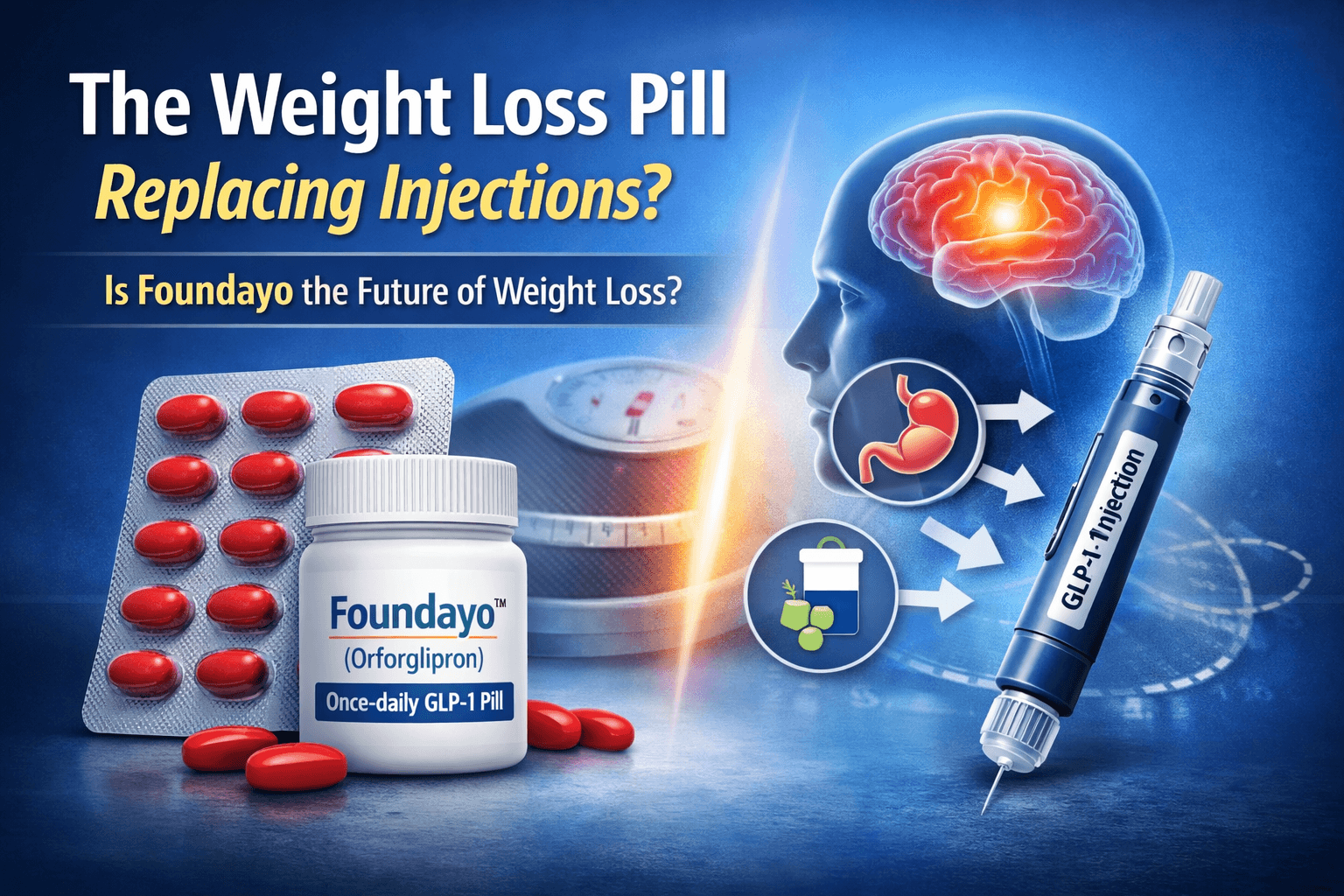
For the past few years, weight loss medicine has been dominated by GLP-1 receptor agonist injections such as semaglutide and tirzepatide. These drugs have transformed obesity management but come with a key limitation: they require injections.
Now comes Foundayo (orforglipron), a once-daily oral pill that may significantly shift the treatment landscape. In April 2026, the U.S. Food and Drug Administration (FDA) approved orforglipron as the first non-peptide oral GLP-1 receptor agonist, marking a major advancement in obesity pharmacotherapy (Eli Lilly Press Release, 2026).
What is Foundayo?
Foundayo is the brand name for orforglipron, a small-molecule GLP-1 receptor agonist developed by Eli Lilly and Company. Unlike earlier GLP-1 drugs that are peptide-based and require injections, orforglipron is orally bioavailable.
It is indicated for:
- Obesity
- Overweight individuals with comorbidities such as diabetes, hypertension, or dyslipidemia
The drug is taken once daily without strict food restrictions, improving usability compared to earlier oral GLP-1 formulations (Eli Lilly Investor Release, 2026).
Mechanism of Action
Orforglipron works by activating GLP-1 receptors, mimicking endogenous incretin hormones. The pharmacodynamic effects include:
- Appetite suppression via hypothalamic pathways
- Increased satiety
- Delayed gastric emptying
- Enhanced glucose-dependent insulin secretion
These mechanisms are consistent with established GLP-1 physiology (NCBI StatPearls – GLP-1 Receptor Agonists).
Clinical Efficacy and Weight Loss Data
Clinical trials have demonstrated meaningful weight reduction with orforglipron.
A phase 2/3 trial published in the New England Journal of Medicine reported double-digit percentage weight loss in patients receiving higher doses, with results comparable to earlier GLP-1 therapies (NEJM Study).
Patients achieved approximately 9–12% placebo-adjusted weight loss, with higher absolute reductions at maximum dosing.
Why Foundayo Could Replace GLP-1 Injections
1. Removal of Injection Barrier
A major limitation of current GLP-1 therapy is the requirement for injections. Oral administration improves patient acceptance and adherence.
2. Simplified Treatment Protocol
Unlike peptide-based oral semaglutide, which requires fasting conditions, orforglipron does not require strict timing or dietary restrictions (Eli Lilly Data).
3. Scalability and Accessibility
Oral small-molecule drugs are easier to manufacture and distribute compared to biologics.
4. Broader Prescribing Base
Primary care physicians may prescribe oral medications more comfortably, expanding treatment reach.
The importance of scalable obesity treatments is also emphasized by the World Health Organization (WHO – Obesity Fact Sheet).
Important Clinical Reality
Despite its advantages, Foundayo is unlikely to immediately replace injectable GLP-1 drugs.
- Injectable agents still demonstrate higher efficacy (up to 15–20% weight loss)
- Long-term cardiovascular outcome data are still pending
- Daily dosing may affect adherence
A coexistence phase between oral and injectable therapies is expected.
Side Effects and Safety Considerations
The safety profile appears consistent with the GLP-1 drug class:
Common Adverse Effects
- Nausea
- Vomiting
- Diarrhea
- Constipation
These are well-documented across GLP-1 therapies (NCBI – Adverse Effects).
Ongoing Safety Monitoring
Regulatory authorities have required further evaluation of:
- Hepatic safety
- Cardiovascular outcomes
- Lactation safety
According to Reuters, post-marketing studies have been mandated to address these concerns (Reuters Report, 2026).
Availability in India
Currently approved in the United States, Foundayo is expected to follow a typical regulatory timeline for India:
- Filing: 2026–2027
- Approval: 2027–2028
- Market availability: around 2028
Cost Considerations
Initial pricing in the US has been reported via PR Newswire (Launch Report).
In India, expected pricing may range between ₹8,000–₹18,000/month initially.
This article is based on current clinical evidence, regulatory announcements, and published trial data. As newer data emerges, clinical recommendations may evolve.