
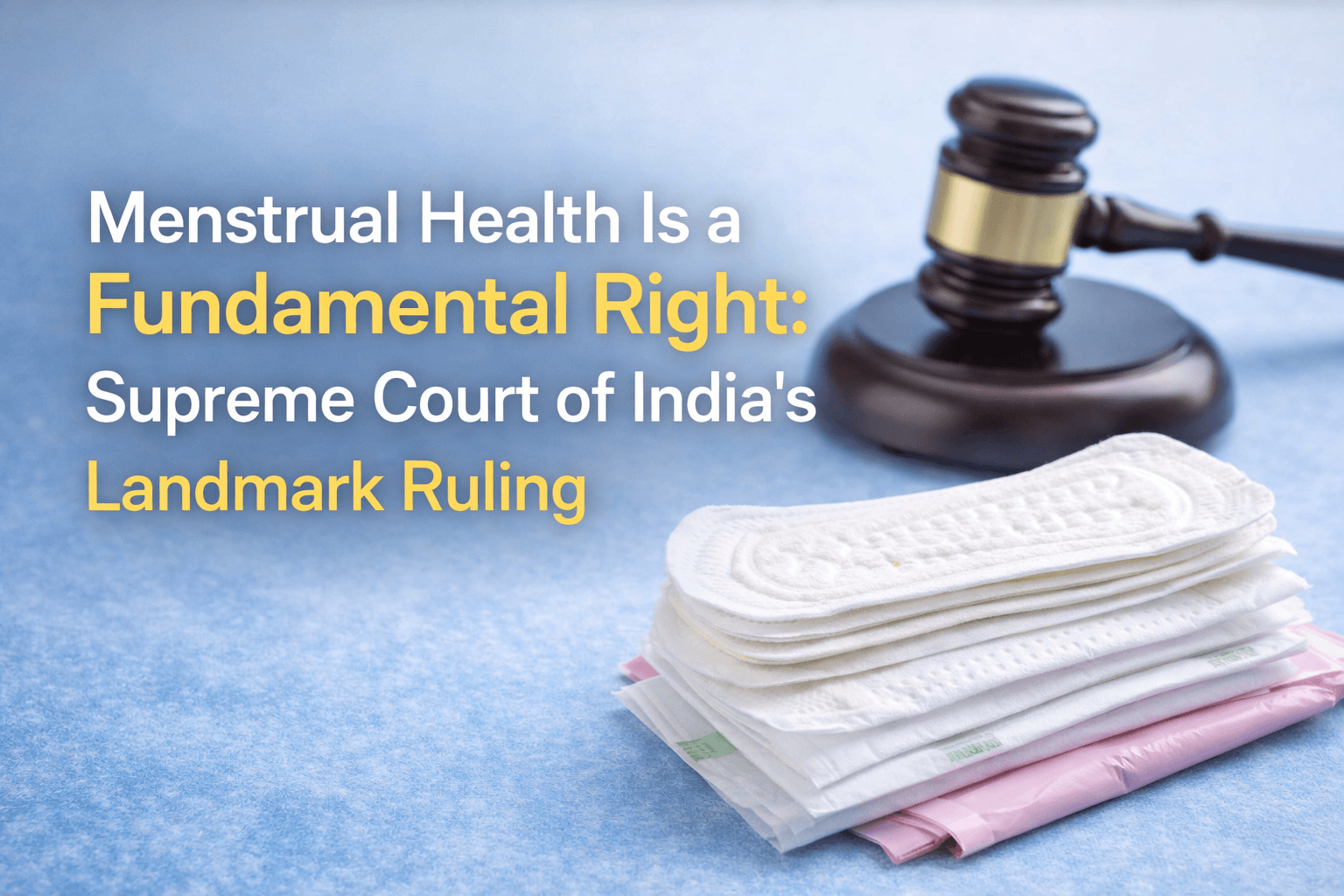
In a landmark and transformative judgment, the Supreme Court of India has held that menstrual health and hygiene are part of the fundamental Right to Life under Article 21 of the Constitution.
This ruling marks a crucial shift: menstrual hygiene is no longer a discretionary welfare measure—it is now a constitutional obligation of the State, rooted in dignity, bodily autonomy, health, equality, and the right to education.
What the Supreme Court Ruled
The Court clarified that access to menstrual hygiene and health services is intrinsic to:
Human dignity Bodily autonomy Privacy Physical and mental health
By bringing menstrual health under Article 21, the Court recognised that denying safe and dignified menstrual care directly violates a person’s right to live with dignity.
Key Directives Issued by the Court
The judgment lays down clear, enforceable directions to the Central Government, States, Union Territories, and educational institutions.
1. Free Menstrual Products in Schools
All schools—government and private—must provide free, biodegradable sanitary pads to girls.
This removes cost as a barrier to menstrual hygiene.
2. Functional Sanitation Infrastructure
Schools are required to ensure:
Separate, gender-segregated toilets Continuous access to water and soap Clean, safe sanitation facilities
Infrastructure gaps were recognised as a major cause of dignity loss and absenteeism.
3. Menstrual Hygiene Management (MHM) Facilities
Schools must establish dedicated menstrual hygiene corners, including:
Disposal bins Spare sanitary products Emergency clothing (undergarments/uniforms) Safe waste-management systems
4. Disability-Inclusive Facilities
The Court specifically mandated that menstrual facilities must be accessible to persons with disabilities, ensuring inclusion and equality.
5. Time-Bound Implementation
States and UTs have been directed to implement these measures within a fixed timeline (widely reported as around three months), making compliance legally accountable.
Why the Supreme Court Took This Step
The Court’s reasoning is grounded in constitutional values and public-health realities.
Human Dignity
Inadequate menstrual hygiene forces girls to experience shame, discomfort, and loss of dignity—something the Constitution does not permit.
Right to Education
Poor menstrual infrastructure contributes to:
School absenteeism Drop-outs among adolescent girls
This undermines the constitutional right to education.
Equality and Non-Discrimination
Systemic neglect of menstrual needs was recognised as structural gender discrimination, violating equality guarantees.
Legal Framework Behind the Ruling
The Court relied on its established interpretation of Article 21, which already includes:
Right to dignity Right to privacy Right to health
Judgments such as Puttaswamy v. Union of India laid the groundwork for recognising menstrual health as constitutionally protected.
Broader Implications of the Judgment
Legal and public-health experts see this ruling as transformative because it:
Elevates menstrual health from “welfare” to a fundamental right Creates clear legal accountability for governments and schools Helps dismantle stigma around menstruation Strengthens girls’ participation in education Advances gender equality and social justice
When Policy Must Meet People
This ruling reinforces a critical truth:
Public health is not only about infrastructure—it is about dignity, access, and lived experience.
Ensuring menstrual health is essential to building a society that is equitable, inclusive, and humane.
When to Seek Guidance or Support
Institutions, schools, NGOs, and families should seek expert guidance if:
Implementing menstrual hygiene programs Designing inclusive sanitation infrastructure Addressing adolescent mental and physical health Supporting girls facing school absenteeism or stigma
👉 Consult healthcare and public-health professionals to ensure menstrual health initiatives are medically sound, inclusive, and sustainable